Great Lakes Research Center (GLRC) Description
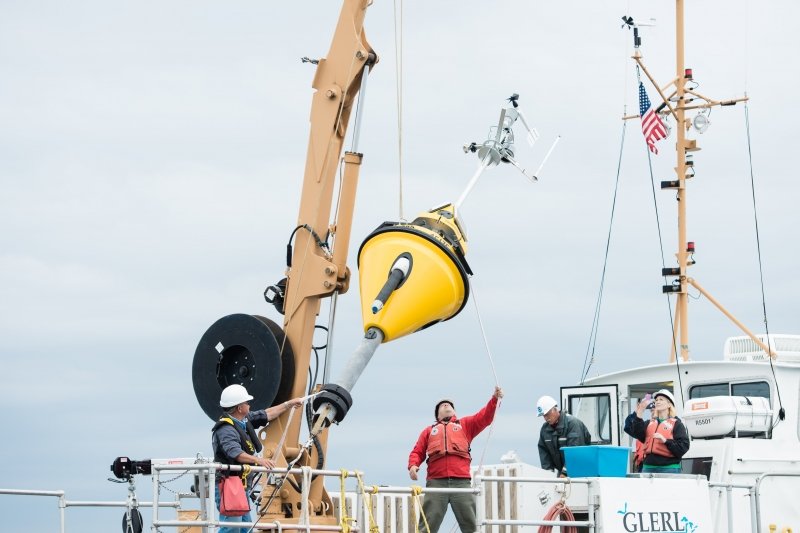
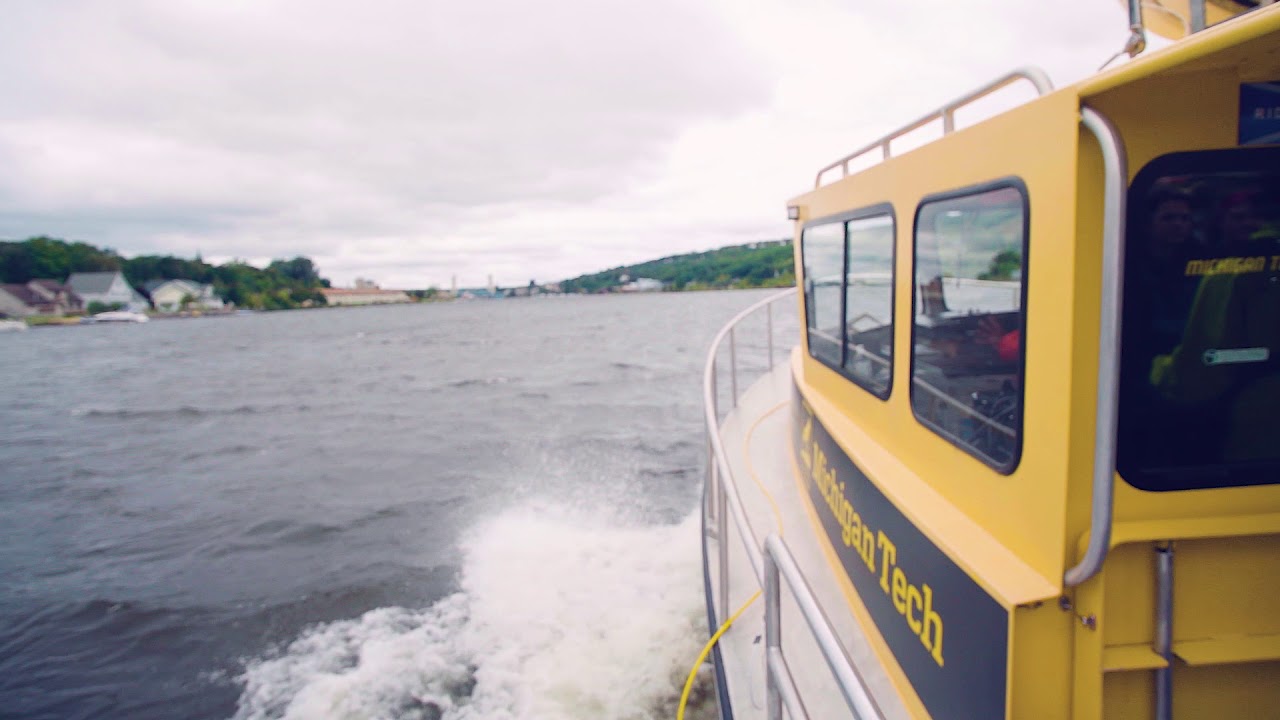
The Great Lakes Research Center will provide state-of-the-art laboratories to support research on a broad array of topics. Faculty from many departments across campus will collaborate in conducting interdisciplinary research relating to air-water interactions, biogeochemistry, hydrodynamics and sediment transport, fisheries, invasive species and food web relationships, low impact development, and storm-water management. The Center for Science and Environmental Outreach will provide K12 student, teacher, and community education/outreach programs utilizing the GLRC’s Extension and Limnology Teaching Labs. The GLRC also contains a boathouse and convenient docking facility, providing a year-round home for Michigan Tech’s research vessel, the Agassiz.
The Great Lakes Research Center features public spaces where visitors will have an opportunity to observe visualizations of global environmental research via NOAA’s Science-on-a-Sphere, simulations of Lake Superior current patterns and water quality conditions on a 3D Geowall, real-time data output from vessels at sea and offshore monitoring stations, and unique underwater views delivered by remotely-operated vehicles. The Low Impact Development research team will operate a rain garden, green roof, and constructed wetland remediation demonstration area on the GLRC site. A mesocosm research system, featuring several 300-gallon outdoor fish tanks will permit researchers to conduct ecosystem manipulation studies under natural conditions of light and temperature.
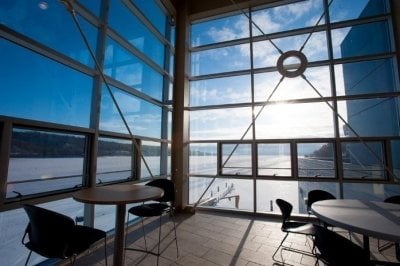
The Great Lakes Research Center also includes several large and small conference rooms supporting small group collaboration on-site, as well as video-conferencing with colleagues across the state and world. In addition, the GLRC boasts a 100-seat auditorium with ample space for receptions and other events with grand views of the Keweenaw Waterway as a backdrop.
See the Photo Gallery on Flickr
See the live Great Lakes Research Center WebCam |
Great Lakes Research Center Seminars On Video
"LiDAR and MSS Applications For Coastal Ecosystem Research & Restoration Projects" W. Charles Kerfoot, Lake Superior Ecosystem Research Center & Department of Biological Sciences, Michigan Technological University
“Critical Issues for the Great Lakes.” Lana Pollack, U.S. delegate of the International Joint Commission delivered the World Water Day Lecture
"Full Scale Coastal Experiments… from Flying Buoys to Caribou Hunters" Dr. Guy Meadows, University of Michigan and Adjunct Professor in GMES at Michigan Tech, A Geological & Mining Engineering & Sciences Seminar at Michigan Technological University on February 8, 2012
"Across hydrological interfaces from coastal watersheds to the open lake: Finding signals in the Great Lakes Coastal Zone" Dr. Jack Kelly, director of EPA's Midcontinental Ecology Division in Duluth; See Video of presentation on Engineering Michigan Tech Channel on Vimeo (Dec. 6, 2011)
"Green Bay Hypoxia: Biogeochemical Dynamics, Watershed Inputs and Climate Change" ---
NOAA Coastal Hypoxia Research Program;
Presented by Dr J. Val Klump: Director, Great Lakes WATER Institute and Professor, School of Freshwater Sciences, University of Wisconsin, Milwaukee Department; See Video of presentation.
“New Directions on Great Lakes Water Resources Policy”
Dave Dempsey, Policy Advisor, International Joint Commission; Presented at Michigan Technological University October 25, 2011 See Video of presentation.
Christine Manninen; Communications / GLIN Director, Great Lakes Commission, Ann Arbor, MI.; "State of the Great Lakes 2011: Successes and Continued Challenges
Dr. Bob Shuchman, Michigan Tech Research Institute: "The Role of Satellite Derived Information in the Restoration of the Great Lakes,"Sep 19: EPSSI Seminar:
|